
The Brakes,
They Still Be Hot
Getting temperature sensors in place is great and all, but we always knew that those were more of a monitoring tool than a solution to the overheating problem. So here’s our attempt at keeping those bad boys a little cooler
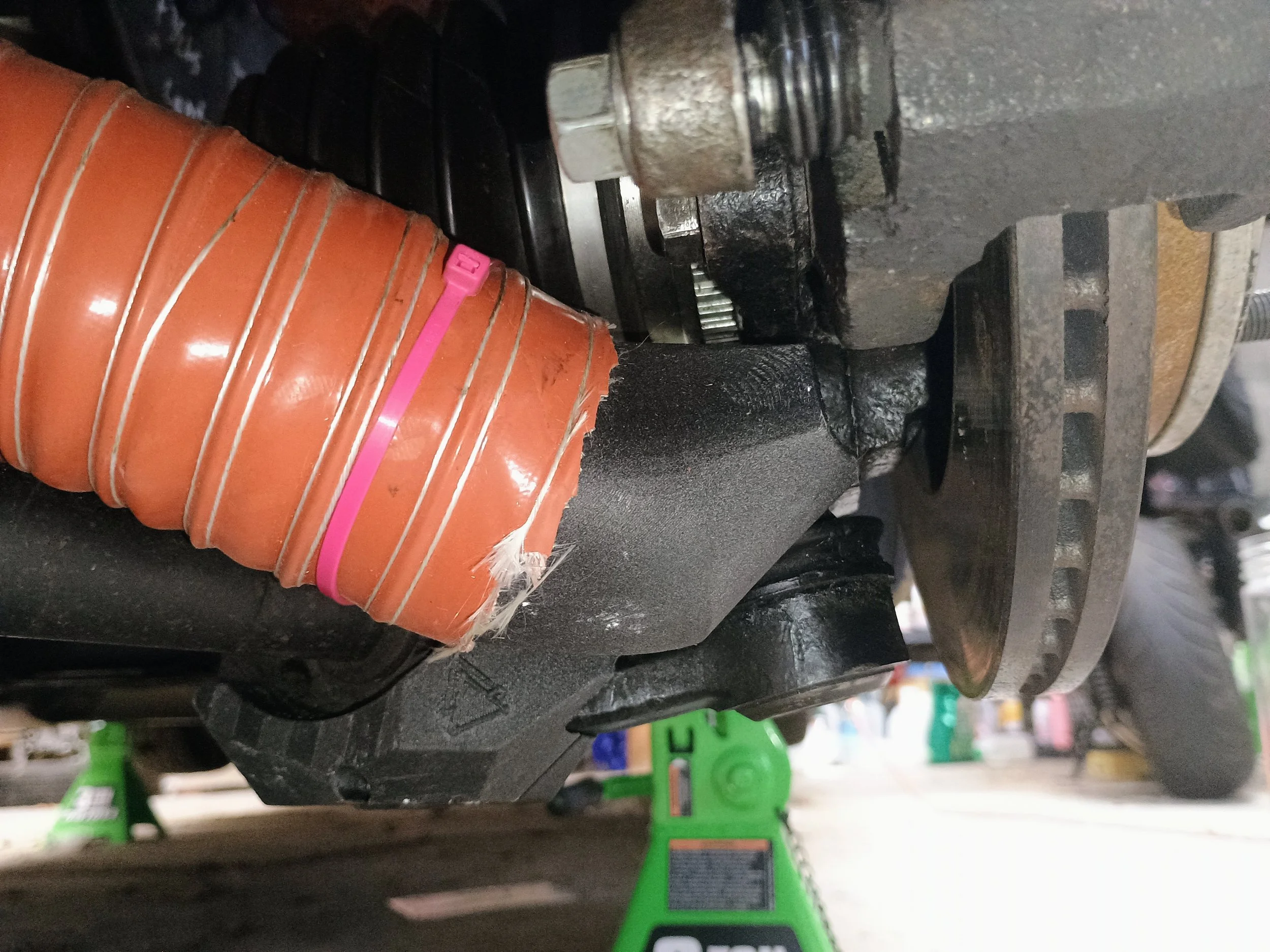
The same PET-CF material used in the brake temperature sensors is used in the nozzle directing air from the front of the vehicle into the central hub of the rotor.
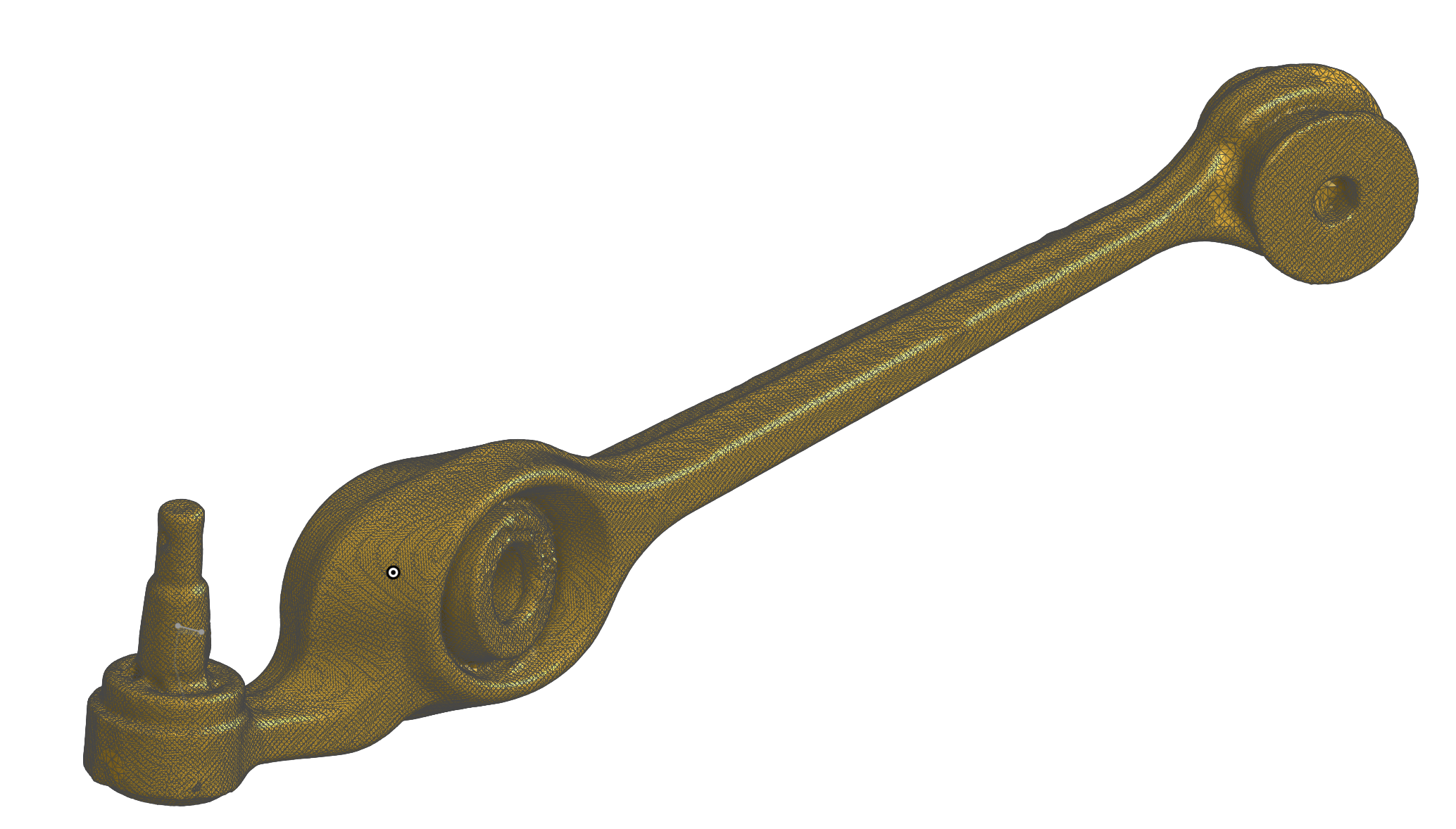
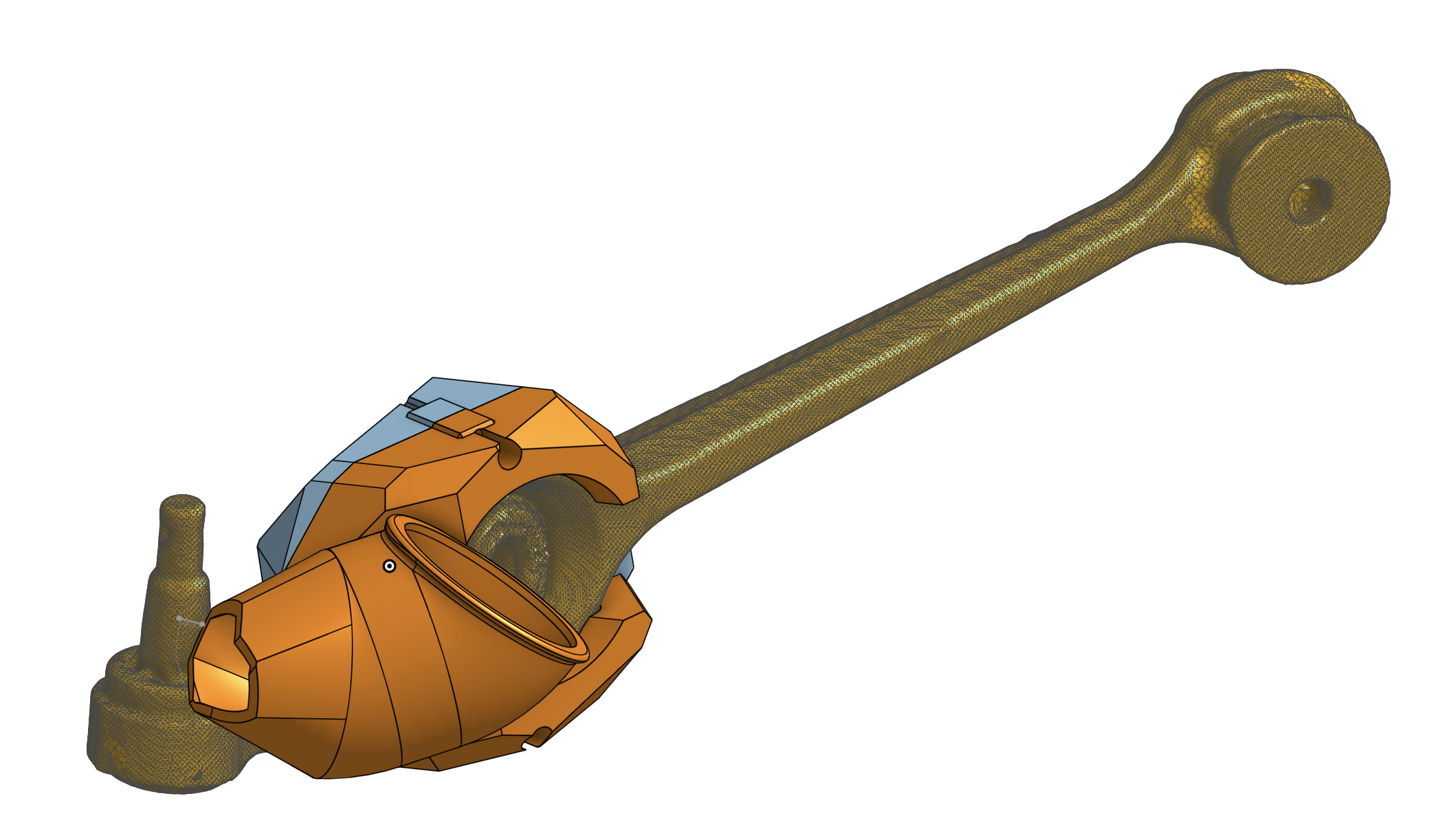
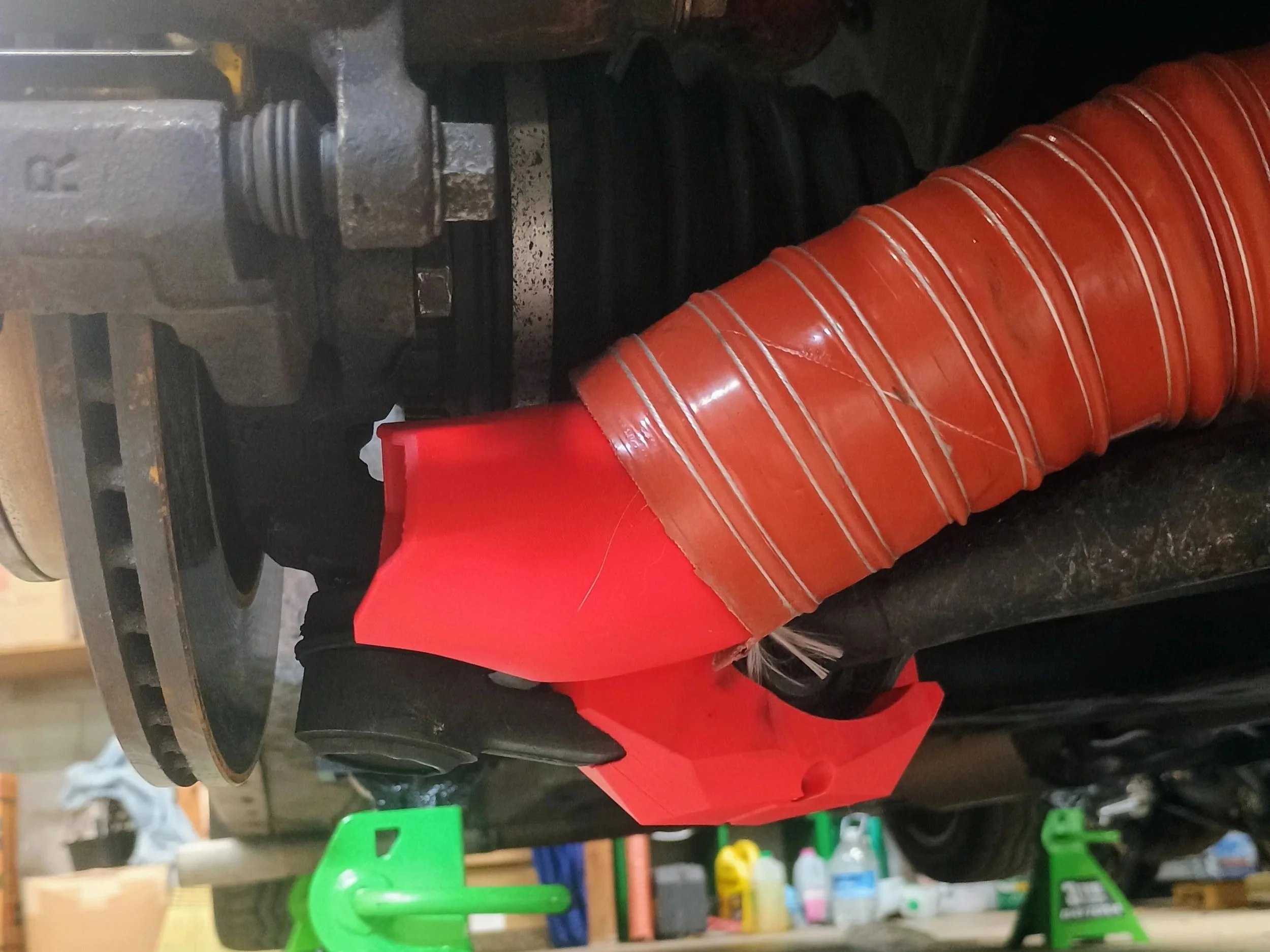
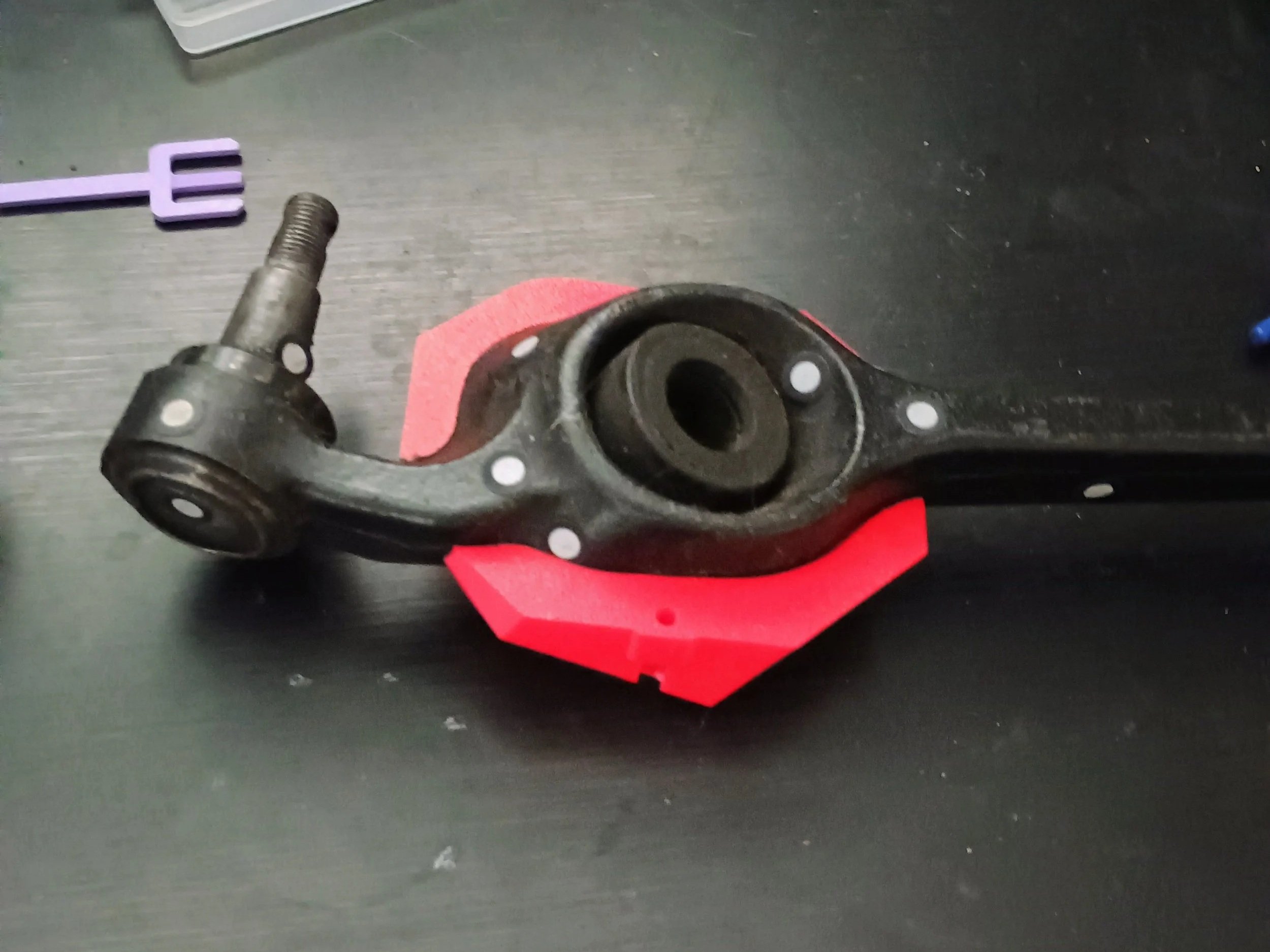
We laser scanned the lower control arm, as it seemed like the most reasonable place to mount the ducting nozzle.
Then Proceeded to model the nozzle onto the shape of the control arm. Which resulted in a very satisfying fit.
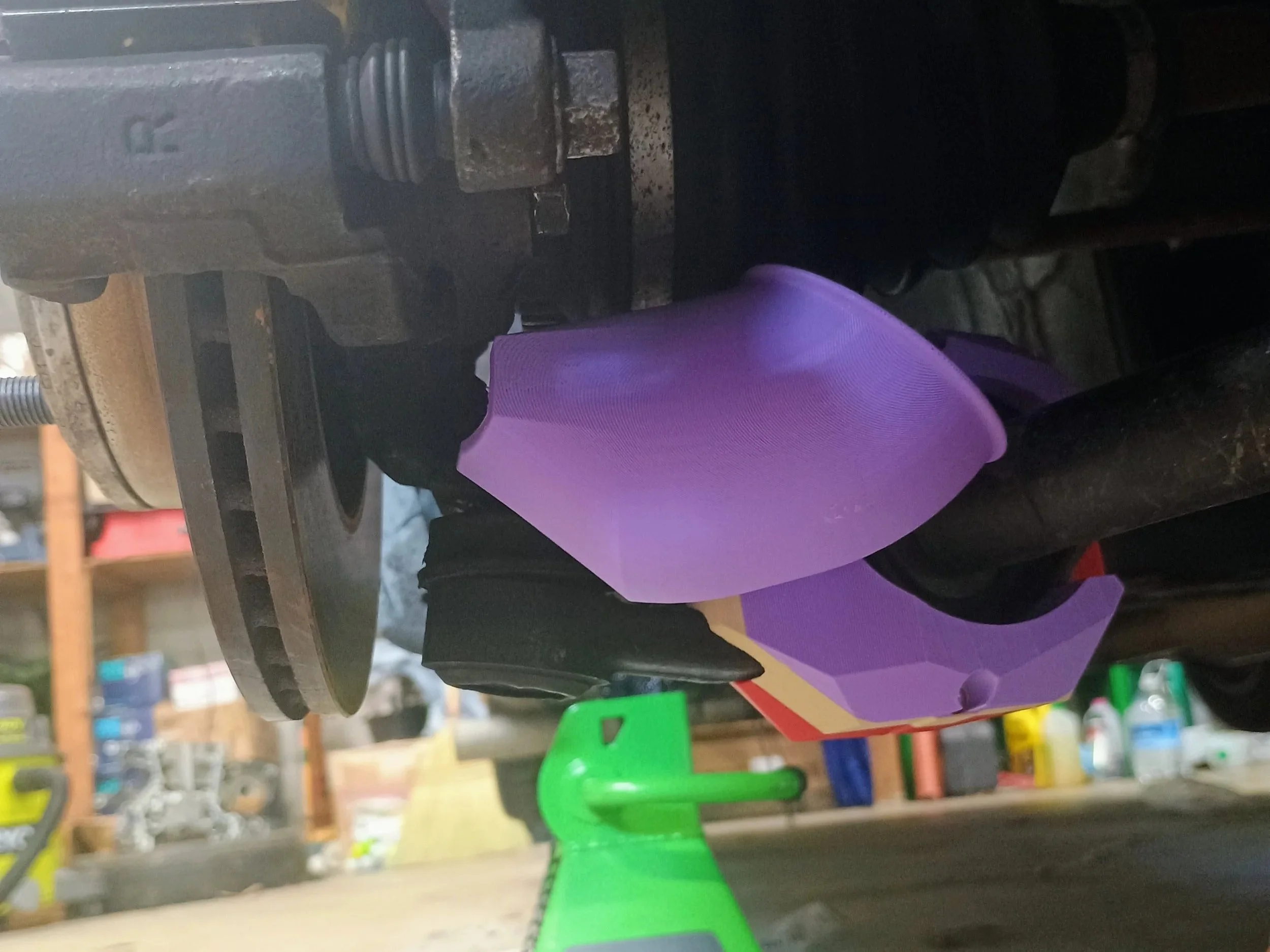
Our main design update here was to adjust the nozzle shaping. Initially it was designed to dump as much air onto the whole rotor as possible. However, when researching the effects of this cooling method, it became clear that this could lead to a significant thermal gradient from one side of the rotor to the other, causing uneven pad wear, rotor warping, and a whole host of other issues. Therefore the nozzle was reprofiled to send the air more specifically into the hub of the rotor, to be distributed by the rotor veins.